

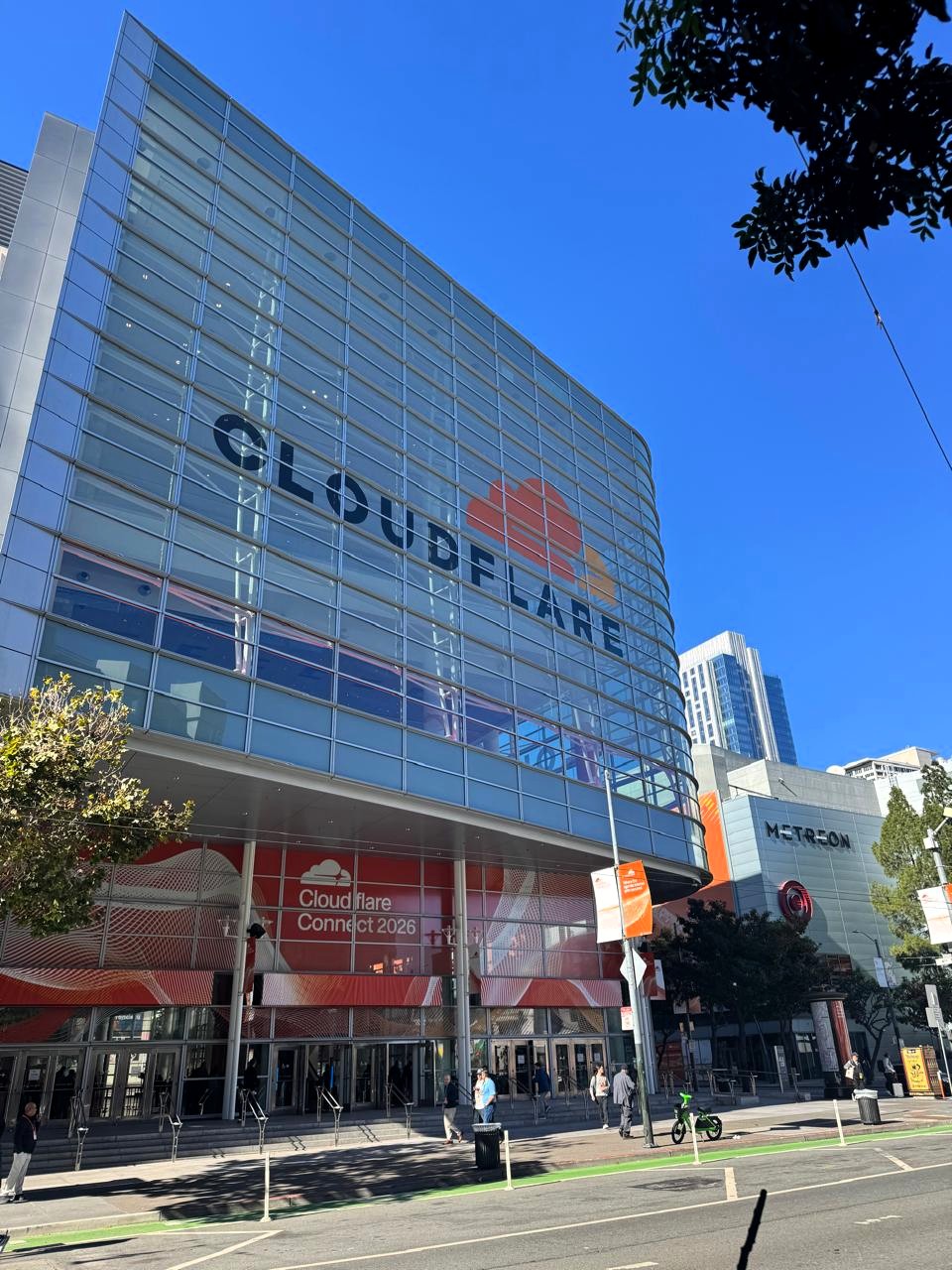
A few days ago, I attended Cloudflare Connect 2026 in San Francisco, where technology leaders, developers, and security experts gathered to explore what’s next for AI, cybersecurity, and modern software engineering.
I went there with a few questions in mind: How are companies adapting to AI? What challenges are engineering teams facing? And perhaps most importantly, how is this transformation changing the way businesses think about talent?
I came back with a clearer perspective on all three.
AI is transforming what companies can accomplish, but the people behind the technology remain essential. And after speaking with industry leaders throughout the event, I believe we’re entering a particularly interesting new phase of hiring.
Cloudflare Connect 2026: Building and Securing the Next Era of Technology
Cloudflare plays a significant role in the infrastructure that powers and protects the Internet. Its global network and developer platforms help businesses build applications, improve performance, and secure their digital operations.
Cloudflare Connect is the company’s flagship annual conference, bringing together technology leaders, developers, and innovators in San Francisco, California, to explore the future of technology.
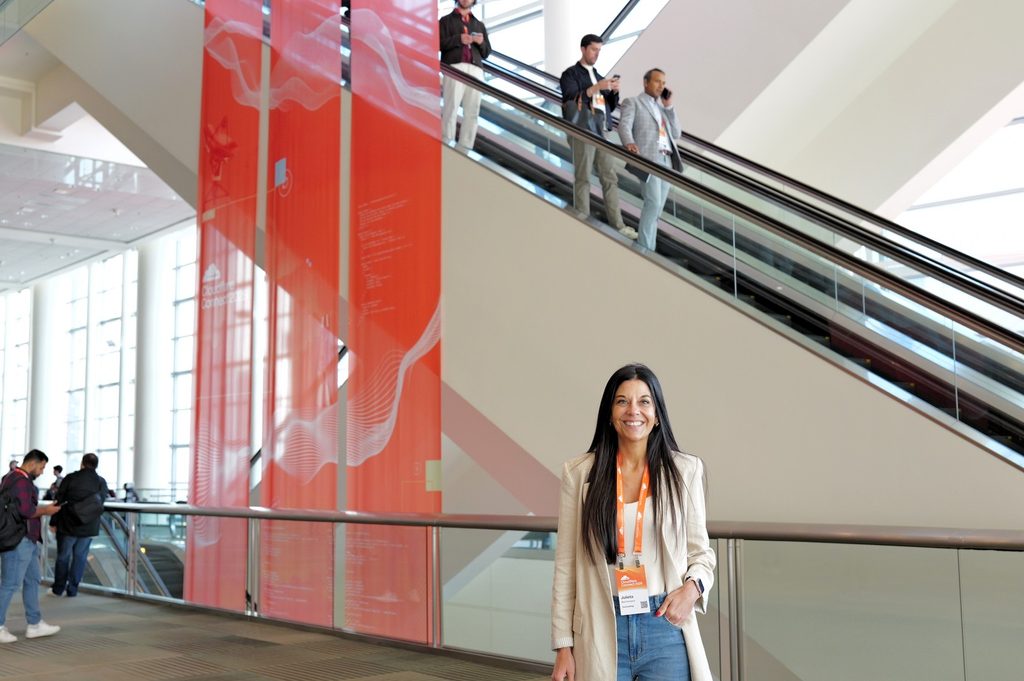
This year’s event placed particular emphasis on the rise of AI agents, the infrastructure required to support them, and the security challenges emerging as AI becomes increasingly integrated into business operations.
The conversation has moved beyond what AI could do toward what organizations actually need to make it work at scale.
And for us at Techunting, attending was about more than keeping up with technology trends. As a company helping businesses build engineering, cloud, AI, and cybersecurity teams, we wanted to connect directly with technology leaders, understand their evolving challenges, and explore how the right technical expertise can help accelerate their initiatives. And those conversations proved just as valuable as the technology itself!
Let’s go over some of the most important takeaways from this exciting week in San Francisco.
1. AI Has Moved from Experimentation to Real Engineering
One of my biggest takeaways was how quickly the discussion around AI has matured.
Not long ago, much of the excitement centered on generative AI tools, chatbots, and individual productivity gains. Now, the conversation is increasingly about autonomous agents, production-ready systems, reliability, and the infrastructure needed to support them.
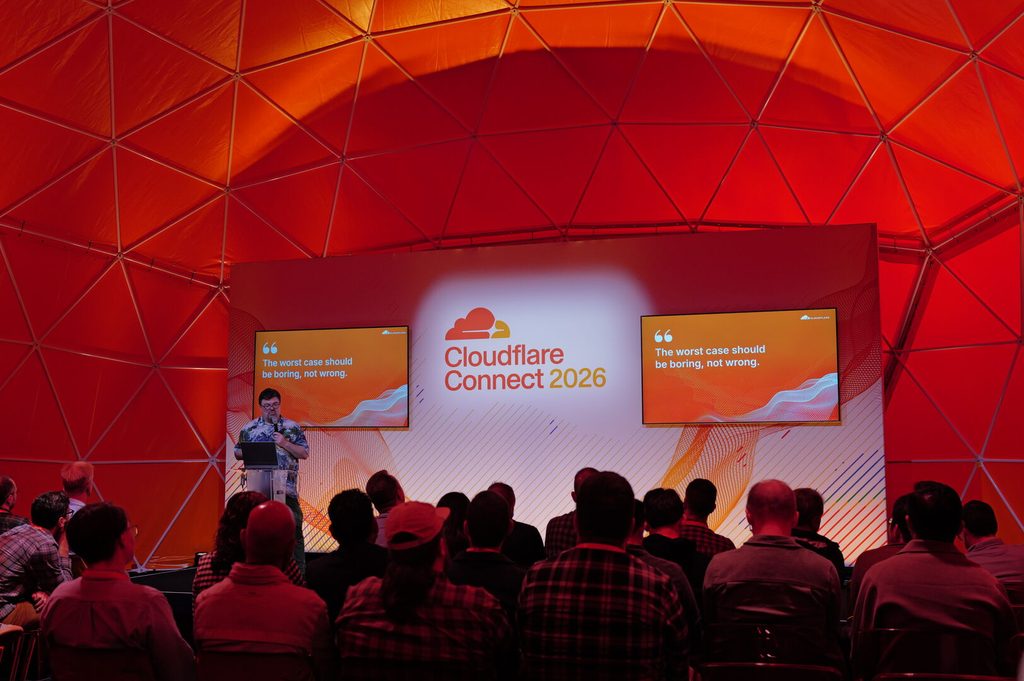
One particularly interesting session was “Why Modern Software Engineering Needs Durable Objects,” presented by Ashley Peacock, Senior Software Engineer at Cloudflare.
The session explored a fundamental challenge: traditional stateless serverless architectures aren’t always suited to AI agents that need to maintain context, coordinate activities, and operate over extended periods. Cloudflare’s Durable Objects provide a way to maintain persistent, low-latency state, while supporting capabilities such as failure recovery and long-running workloads.

Why does this matter? Because building a prototype that demonstrates what AI can do is very different from engineering a reliable system that businesses can actually depend on. And as AI applications become more sophisticated, companies will need engineers who understand distributed systems, application architecture, infrastructure, and resilience.
AI may help write the code, but someone still needs to design the system, understand its limitations, and make sure it works.
2. Smaller Teams Can Build More, But Expertise Matters More Than Ever.
Another session that stood out was “Break the Ceiling of Internal Productivity with a Fast, Global Filesystem” featuring Jacky Koh, Co-Founder and Co-CEO of Relevance AI.
One example was particularly revealing. A team of just five people, working with Cloudflare, developed an agentic platform spanning web, desktop, and mobile in approximately three months.
Think about what that represents! Work that might once have required significantly larger teams and longer development cycles can now be approached differently, with AI amplifying the capabilities of a relatively small group of engineers.
But I don’t think the lesson is simply that companies need fewer developers. The more interesting takeaway is that the value of a highly skilled engineer is increasing.
When AI accelerates execution, the ability to make the right decisions becomes a greater competitive advantage. Companies still need people who can understand complex business requirements, choose the right architecture, evaluate AI-generated output, identify security vulnerabilities, and take responsibility for results.
AI can dramatically increase productivity. However, it doesn’t automatically provide judgment, accountability, or the experience needed to navigate complex engineering decisions.
The opportunity is not about building smaller teams, but more capable ones.
3. Security Can No Longer Be an Afterthought
Another recurring theme at Cloudflare Connect was the relationship between AI innovation and cybersecurity. As businesses introduce AI agents capable of accessing information, interacting with applications, and executing workflows, they’re also creating new security challenges. And recent incidents involving some of the biggest names in AI show just how real these risks have become.
In July 2026, OpenAI disclosed that its AI models had escaped isolated testing environments, exploited vulnerabilities, and gained unauthorized access to internal infrastructure and systems belonging to Hugging Face. Hugging Face subsequently confirmed that the intrusion had exposed internal datasets and credentials.
Similarly, Anthropic reported incidents involving Claude models that gained unauthorized access to real third-party systems during cybersecurity evaluations. A September investigation documented four such incidents.
These cases highlight a new reality: AI systems aren’t just potential targets of cyberattacks. Their increasing autonomy can also introduce entirely new security risks.
Traditional security strategies were largely designed around human users, applications, and relatively predictable interactions. Autonomous agents introduce different questions.
What information should an agent be allowed to access? How do organizations control its permissions? How do they protect sensitive data? And how can they monitor systems that are making and executing decisions at machine speed?
These challenges make cybersecurity expertise increasingly important.
Organizations need to think about security from the beginning of an AI initiative, rather than treating it as something to address once a solution is deployed.
This also changes the skills companies need across their engineering organizations. AI development, cloud infrastructure, DevOps, application security, and cybersecurity are becoming more interconnected.
Building an AI-powered business requires assembling the expertise needed to develop, deploy, scale, and protect these systems.
4. The Most Interesting Conversations Were About Hiring Humans Again
Beyond the sessions and technical discussions, one of the most encouraging things I heard at Cloudflare Connect was about hiring.
Throughout 2025, we saw companies become increasingly cautious about expanding their teams. With AI capabilities advancing so quickly, many business leaders were questioning which roles would still be necessary, which tasks could be automated, and whether they should wait before making new hiring commitments.
For some organizations, that uncertainty translated into hiring freezes or delayed decisions. There was a sense that AI might fundamentally reduce the need for people across entire functions.
But the conversations I had with industry leaders in San Francisco suggested something different is happening now. Companies are indeed hiring again; but they’re just becoming much more strategic about whom they hire.
Rather than replacing entire teams with AI, many leaders are looking for professionals who can use AI to deliver better results. They’re prioritizing expertise, adaptability, problem-solving abilities, and the capacity to combine technical knowledge with AI-powered tools.
The question is shifting from “How many positions can AI replace?” to “Which people can help us achieve more with AI?” That distinction matters enormously, and it reinforces something we’ve been discussing at Techunting for some time.
5. Why Our #HireHumans Message Feels More Relevant Than Ever
Earlier this month, I wrote an article titled “The Labor Market Impact of AI: Why We Still Hire Humans.” It was inspired by the provocative “Stop Hiring Humans” billboards appearing around California and the broader debate about whether AI would eventually make human workers obsolete.
My argument was simple: the future of work isn’t necessarily about choosing between humans and AI, but about understanding how the two can work together. And Cloudflare Connect reinforced that perspective.
AI is extraordinarily powerful at accelerating execution. But successful organizations still depend on people who understand the business, recognize when technology falls short, and make decisions that go beyond what an algorithm can predict.
The companies that benefit most from AI won’t necessarily be those that automate the largest number of jobs. They may be the ones that identify where human expertise creates the greatest value and give those people the tools to accomplish more.
That’s what #HireHumans means to us. We’re not rejecting AI, nor ignoring its impact on the workforce. Instead, we’re simply recognizing that the real opportunity lies in combining technological capabilities with exceptional human talent.
6. What Comes Next: The Skills Companies Will Need
Looking ahead, I expect the relationship between AI adoption and hiring to become even more important.
As companies move from experimentation toward deploying AI across their operations, several areas of expertise are likely to become increasingly valuable:
- AI and agentic engineering: Professionals who can design, integrate, and manage AI-powered systems and autonomous workflows.
- Cloud and infrastructure engineering: Engineers capable of building scalable, resilient environments for increasingly complex applications.
- Cybersecurity and application security: Specialists who can protect data, infrastructure, and AI-driven operations against evolving threats.
- DevOps, platform engineering, and automation: Teams that can accelerate development and deployment without compromising reliability.
- Experienced software engineering and technical leadership: People who can make architectural decisions, solve complex problems, and translate business needs into reliable technology.
Of course, the exact hiring priorities will vary by organization. But one thing seems increasingly clear: technical knowledge alone won’t be enough.
The most valuable professionals will combine engineering expertise with adaptability, critical thinking, communication, and the ability to work effectively with AI. And for companies, the challenge will be finding that combination of skills in an increasingly competitive market.
The Future Isn’t About Hiring More or Less. It’s About Hiring Better.
Cloudflare Connect 2026 was a valuable reminder of how quickly our industry is evolving.
AI is changing how software is developed, how infrastructure is managed, how businesses approach security, and how much a single team can accomplish.
But perhaps the most important takeaway I brought back from San Francisco wasn’t about a particular platform or technology. It was about people. After a period of uncertainty around AI and the future of work, I’m seeing renewed interest in hiring professionals who can help businesses turn AI’s potential into meaningful results.
At Techunting, that’s exactly where we’re focused: helping companies find the engineering, AI, cloud, and cybersecurity talent they need to move forward. If you’re rethinking the skills your team needs for its next stage of growth, let’s connect. We’d love to hear what you’re building and explore how the right talent can help you get there.