

A few months ago, people started seeing a message around California that was difficult to ignore: “Stop Hiring Humans.” The billboards were provocative on purpose. And they worked! People talked about them.
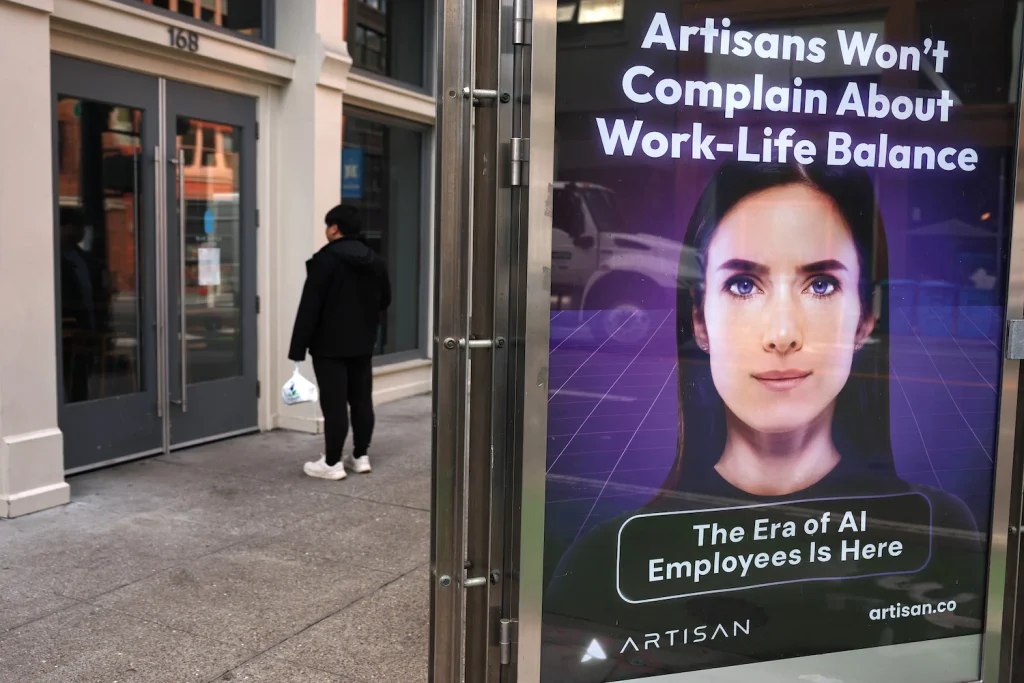
But working every day with companies building engineering, AI, cybersecurity, cloud, and data teams, I kept coming back to the same thought: I don’t think we should stop hiring humans. I think we need to rethink what we’re hiring humans to do.
That became the inspiration behind our own campaign at Techunting: #HireHumans. Not because we are against AI, quite the opposite. AI is changing how we work, and the productivity gains we’re beginning to see are extraordinary. But I don’t believe the most interesting story is AI replacing people, but instead how AI is amplifying people.
Let’s explore how the early labor-market data is starting to show why.
AI exposure doesn’t automatically mean job replacement
One of the most useful ways to understand what’s happening comes from Anthropic’s research on the labor-market impacts of AI. Instead of asking only what AI could theoretically do, Anthropic looked at what AI is actually being used to do, a distinction that truly matters.
In Computer & Math occupations, researchers estimate that LLMs could theoretically affect 94% of tasks. Yet Anthropic’s observed data shows Claude being used across only about 33% of those tasks today. That’s a huge gap between capability and real-world adoption.
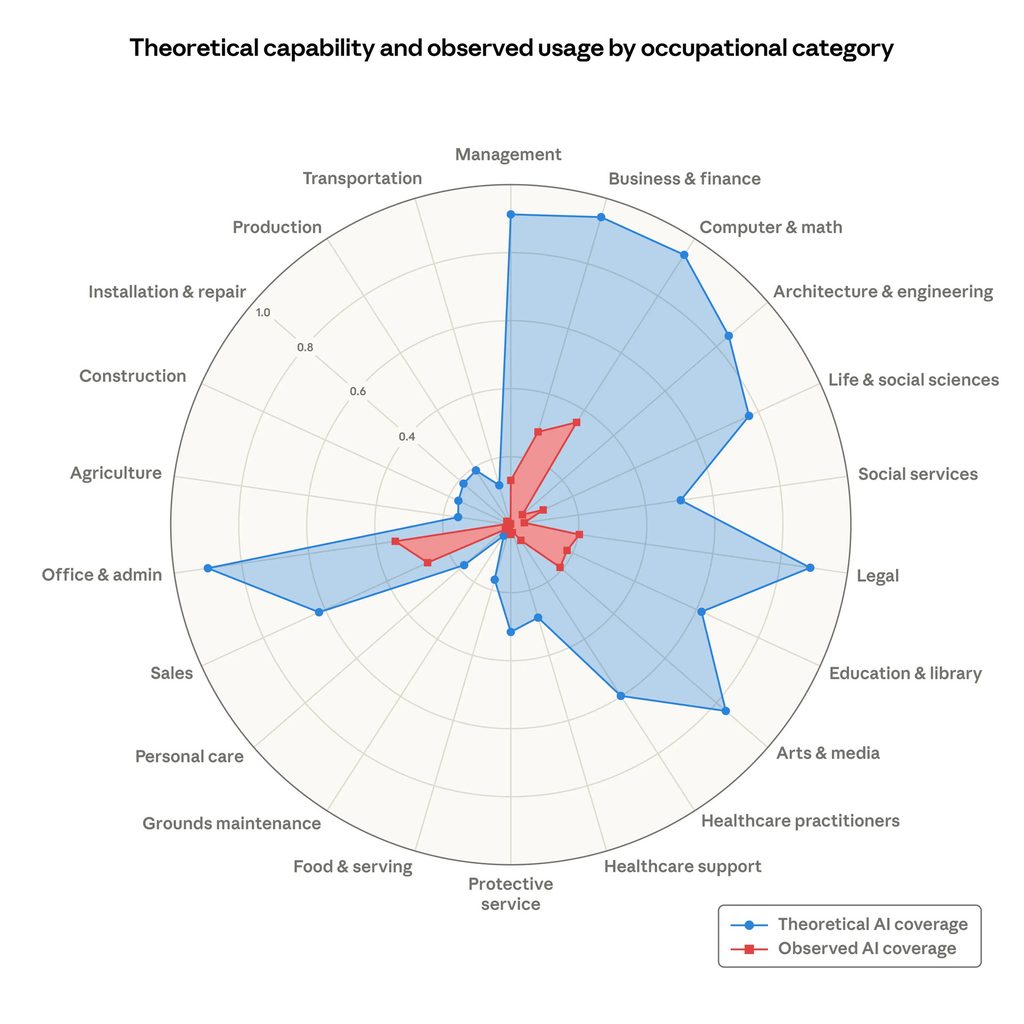
And even exposure itself doesn’t mean that an entire job disappears. Most jobs are collections of tasks. Some of those tasks can be automated. Others can be accelerated. Others still require human judgment, context, communication, creativity, accountability, or expertise.
So the equation isn’t AI capability = job elimination, the reality is much more complicated. Anthropic’s research found no systematic increase in unemployment among workers in the most AI-exposed occupations since late 2022. It did, however, find tentative evidence that hiring has slowed for workers aged 22–25 entering highly exposed occupations. The researchers are careful about the limitations of that finding, but it’s an important signal to watch.
What we’re potentially seeing isn’t the sudden disappearance of entire professions, but the beginning of a redistribution of tasks and value within those professions.
Software development might be our best example
Developers are right at the center of this transition. According to Anthropic’s analysis, computer programmers are currently the most AI-exposed occupation in its dataset, with approximately 75% observed task coverage.
If you stopped reading there, you might conclude that developers are in serious trouble. However, the employment projections say otherwise.
The U.S. Bureau of Labor Statistics expects traditional computer-programmer employment to decline. Its latest 2025–2035 projection puts that decline at 7%, and BLS explicitly points to AI and other technologies automating repetitive programming tasks as one reason. It also expects some higher-skilled programming responsibilities to shift toward software developers.
Now compare that with software developers. In BLS’s 2024–2034 projections, software-developer employment (software developers + software quality assurance analysts and testers) is expected to grow 15.8%, adding approximately 267,700 jobs.
Programming and software engineering aren’t necessarily the same thing. If your primary value is producing straightforward lines of code from clearly defined requirements, AI is becoming extremely good at assisting with, and sometimes automating, those tasks. But let’s not forget that building software requires much more than producing code.
Someone still needs to understand what the business needs. Someone needs to architect the system. Someone needs to understand the existing codebase, make trade-offs, integrate systems, identify security risks, validate outputs, solve unexpected problems, and ultimately decide whether what an AI agent produced should ever reach production.
That is where I think we’re beginning to see the developer’s role evolve.
What happens when one developer can produce dramatically more?
Here’s where things get really interesting. The Pragmatic Engineer recently analyzed aggregated data released by Cursor covering two years of AI-assisted development.
The median developer using Cursor generates around 700 lines of code per week through the tool. At the 90th percentile, that rises to roughly 9,000 lines.
And the top 1%? Around 30,000–40,000 lines of code per week. That’s roughly the same volume generated through Cursor by 45 median users over the same period.
What does this mean? One highly effective user of an AI coding tool can generate an extraordinary amount of code. However, there’s an important caveat: Lines of code are not the same thing as productivity.
Thirty thousand lines of unnecessary or poorly designed code aren’t more valuable than 700 lines solving the right problem. More code can also mean more bugs, more technical debt, and more code that someone eventually has to review. The Pragmatic Engineer raises exactly these questions when discussing Cursor’s numbers.
But the size of the difference is still remarkable. And to me, that’s one of the most important labor-market implications of AI: AI doesn’t necessarily make every worker equally productive. It can dramatically increase the leverage of people who know how to use it well.
AI makes great developers more valuable
This challenges one of the most common assumptions about AI and software development.
If AI can write code, why would we still need expensive, experienced developers? Because using AI to generate code and knowing how to build good software are two very different things.
An experienced engineer understands architecture, dependencies, performance, security, maintainability, business requirements, and the hundreds of small trade-offs that determine whether software actually works in the real world. And what AI does is give that person leverage.
Interestingly, recent industry data also suggests experienced engineers may be particularly well positioned to capture it. The 2026 Pragmatic Engineer survey found AI tools were already mainstream among its engineering audience, while Staff+ engineers were the heaviest users of agents.
The developer’s job therefore begins to shift. Instead of “write this code”, it has become “Understand this problem + design the solution + give the AI the right context +direct it evaluate what it produces + find what it missed + make sure it’s secure + decide what actually ships.” And the sum of that requires even more engineering judgment.
The surprising importance of context
There’s another statistic from Cursor’s data that I find fascinating.
Around 90% of its token usage is input rather than output. In other words, AI coding agents consume vastly more context reading existing code and documentation than they use generating new code. That’s remarkably similar to how software engineers have always worked. Before changing a system, you have to understand it.
AI doesn’t magically remove that requirement. If anything, it makes providing the right context even more important. Someone still has to understand the organization, its infrastructure, its customers, its constraints, and its objectives well enough to direct the technology. And that “someone” is still human.
On the ther hand, this doesn’t mean we should dismiss concerns about AI and employment. One area I believe deserves particular attention is the beginning of people’s careers.
Entry-level jobs may change significantly
Think about how developers traditionally become senior developers. They start with relatively straightforward tasks. They fix bugs, write tests, build small features document systems, review code, make mistakes (and many). Eventually and gradually, we learn why those mistakes happened and develop the judgment required to handle bigger problems.
The thing is, those are also exactly the kinds of well-defined tasks AI can increasingly help perform.
Anthropic’s labor-market analysis found that job-finding rates among younger workers entering highly exposed occupations appear to have weakened relative to less-exposed occupations, although the researchers emphasize that the evidence remains tentative.
That raises a question I think every engineering organization should be asking: If AI performs the tasks we traditionally gave junior employees, how do we create tomorrow’s senior employees? We can’t build an industry where everyone wants senior engineers, but nobody develops them.
Companies may need to rethink junior roles rather than eliminate them, giving younger engineers earlier exposure to AI-assisted workflows, architecture, code review, system thinking, security, and mentorship. That’s why at Techunting we created the Talent Launchpad Initiative, to give young talent the opportunity to growth and learn. The junior developer of 2030 may look very different from the junior developer of 2020, but we definitely still need a path for that developer to exist.
Some jobs will shrink. Others will grow.
None of this means AI won’t eliminate jobs. It most certainly will reduce demand for certain kinds of work.
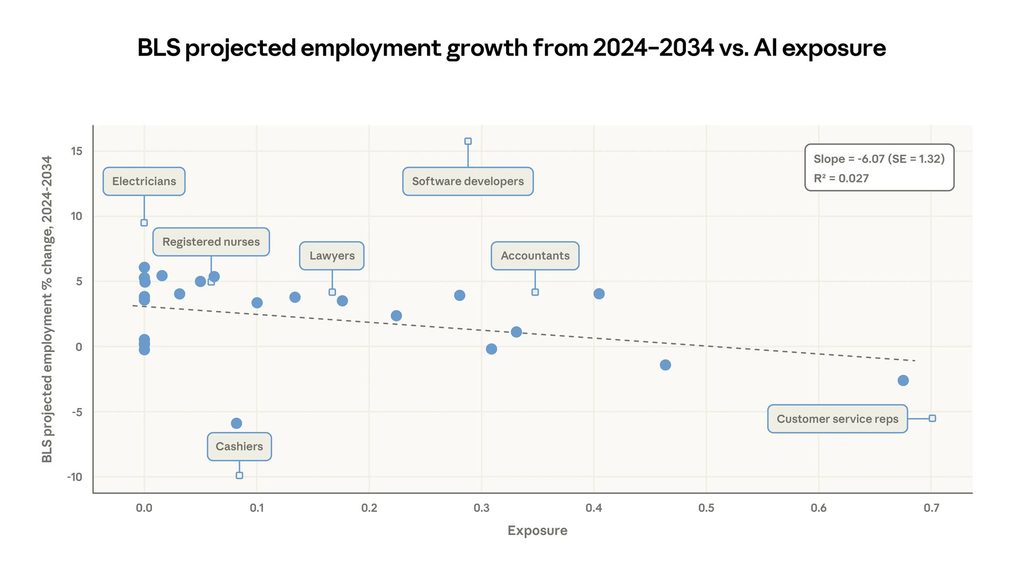
Anthropic found a relationship between observed AI exposure and BLS employment projections: for every 10-percentage-point increase in observed AI coverage, projected occupational employment growth was about 0.6 percentage points lower. The relationship is modest, but it points in the direction many people expect.
BLS projections tell a similar story. Roles containing repetitive or increasingly automatable work are expected to face pressure. Customer service representatives, for example, were projected to decline 5.5% from 2024 to 2034 in the BLS dataset.
At the same time, look at what’s happening elsewhere:
- Data scientists: +33.5%
- Information security analysts: +28.5%
- Computer and information research scientists: +19.7%
- Software developers: +15.8%
BLS specifically expects AI adoption to contribute to strong growth in computer and mathematical occupations, while rising cyber threats are expected to increase demand for information-security professionals.
We’re moving from task execution to human leverage
So when someone asks me whether AI will replace developers, or knowledge workers more broadly, I think we’re asking the wrong question.
The better question is: What happens when one talented person can accomplish significantly more than before? The answer could reshape how companies think about hiring.
Maybe you don’t need ten people manually completing a workflow that three people with AI can accomplish, but then the quality of those three people matters enormously.
They need to know:
- which questions to ask.
- enough expertise to recognize when the AI is wrong.
- understand the business context the model doesn’t have.
- make decisions when there isn’t an obvious answer.
- take responsibility for the outcome.
That’s why I believe the future of hiring is simply about more capable humans. That’s the kind of talent we focus on connecting companies with at Techunting. Get in touch and tell us what your team needs. Our recruiters have a track record of finding exceptional talent, even for highly specialized and hard-to-fill roles.
What companies should hire for now
For technical organizations, this changes the profile of talent worth prioritizing. Pure execution becomes less valuable when execution is cheap, and judgment becomes more valuable.
The engineers who stand out will increasingly be those who combine strong technical fundamentals with the ability to use AI effectively: people who can understand complex systems, work with coding agents, evaluate generated output, recognize security and reliability risks, translate ambiguous business requirements into technical solutions, and make good decisions when AI can’t.
And if the gap between average and exceptional AI users becomes anything like the early Cursor data suggests, finding exceptional technical talent may become even more important.
Why we say: Hire Humans
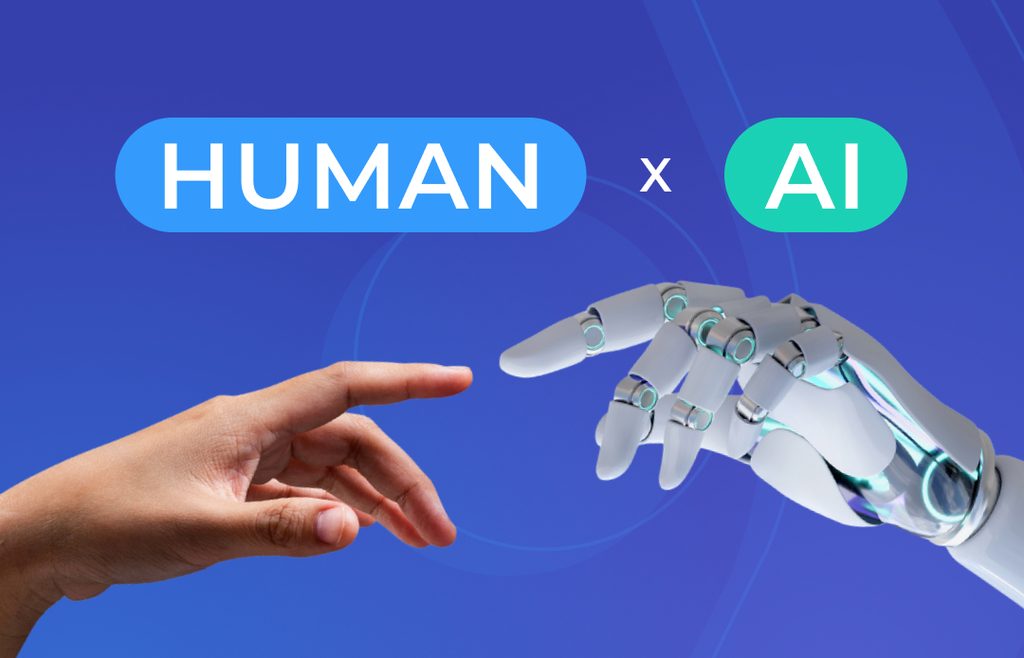
That’s what we mean at Techunting when we say Hire Humans. It’s not an anti-AI statement, quite the opposite.
We believe companies should embrace AI aggressively. Give great developers AI agents. Automate repetitive tasks. Let engineers spend less time writing boilerplate and more time solving difficult problems.
But don’t confuse automation with the absence of people! The companies that win the next phase of AI won’t necessarily be the companies that hire the fewest humans. They’ll be the ones that figure out which humans create the most leverage when you put AI in their hands.
Because the future of work isn’t human or AI. It’s increasingly human × AI. And that multiplication effect could turn out to be much more important than either one alone.